








How the Exposome Affects Every Skin Type in Summer — and How to Stay Ahead of It

Dr. Juan Camilo Calderon
Medical Doctor
Tuesday,

Products:
Table of content: What you will learn
Listen on the Go
Listen Time 5 mins
Dermatology has long focused on genetics as the primary determinant of skin aging. But in the last two decades, research has shifted the understanding significantly: the exposome — the totality of environmental and lifestyle exposures a person experiences throughout their life — accounts for up to 80% of visible skin aging, according to peer-reviewed literature.
In summer, the exposome reaches its peak intensity. UV radiation, environmental pollutants, extreme heat, humidity fluctuations, and lifestyle stressors all converge to act on the skin simultaneously. For aesthetic professionals, understanding how these forces affect different skin types — and having a clinical response — is not optional. It is foundational.
The Summer Exposome: What It Is and Why It Matters
The exposome in summer consists of multiple simultaneous stressors:
- UV radiation (UVA + UVB): UVB causes immediate damage and sunburn; UVA penetrates deeper, driving photoaging, collagen degradation, and melanogenesis. Both contribute to oxidative stress and DNA damage.
- Environmental pollutants: Particulate matter, ozone, and nitrogen dioxide generate free radicals that penetrate the stratum corneum and activate inflammatory pathways — even in the absence of sun exposure.
- Extreme heat: Increases sebum production, disrupts barrier function, and activates inflammatory mediators, particularly in skin prone to rosacea, reactive sensitivity, or post-procedure vulnerability.
- Humidity changes: Indoor air conditioning and outdoor humidity create repeated barrier stress cycles, accelerating transepidermal water loss and increasing skin reactivity.
- Lifestyle factors: Changes in sleep, diet, hydration, and stress during summer compound the biological load the skin must process.
The cumulative effect is significant and measurable: increased free radical burden, accelerated collagen degradation, triggered melanogenesis, and compromised barrier function — often before any visible damage is apparent.

Fitzpatrick-Specific Summer Risk Map
The exposome does not affect all skin types equally. Understanding phototype-specific risks allows professionals to calibrate their summer protocols with precision:
Fitzpatrick I–III
Lower melanin concentration means reduced natural UV filtering capacity. Highest risk for UV-induced erythema, photoaging, and skin cancer. Also the most likely to present with photosensitivity reactions and solar lentigines. Priority: aggressive photoprotection and antioxidant defense.
Fitzpatrick IV–V
Moderate melanin concentration provides some UV filtering but does not eliminate pigmentation risk. Highest risk for post-inflammatory hyperpigmentation (PIH), melasma reactivation, and uneven tone in response to heat and UV combined. Priority: melanocyte stabilization, barrier support, and broad-spectrum photoprotection.
Fitzpatrick VI
Highest melanin concentration offers greater UV protection against erythema but does not prevent PIH, keloid formation, or inflammatory responses. Heat and friction-induced hyperpigmentation are particularly relevant. Priority: anti-inflammatory support, barrier integrity, and gentle photoprotection.

The Clinical Response: One System, Every Phototype
The clinical challenge in summer is offering a coherent protective strategy across the full diversity of patient phototypes — without creating a complex, product-heavy protocol that patients won't follow. Complexion Code addresses this with three focused interventions:
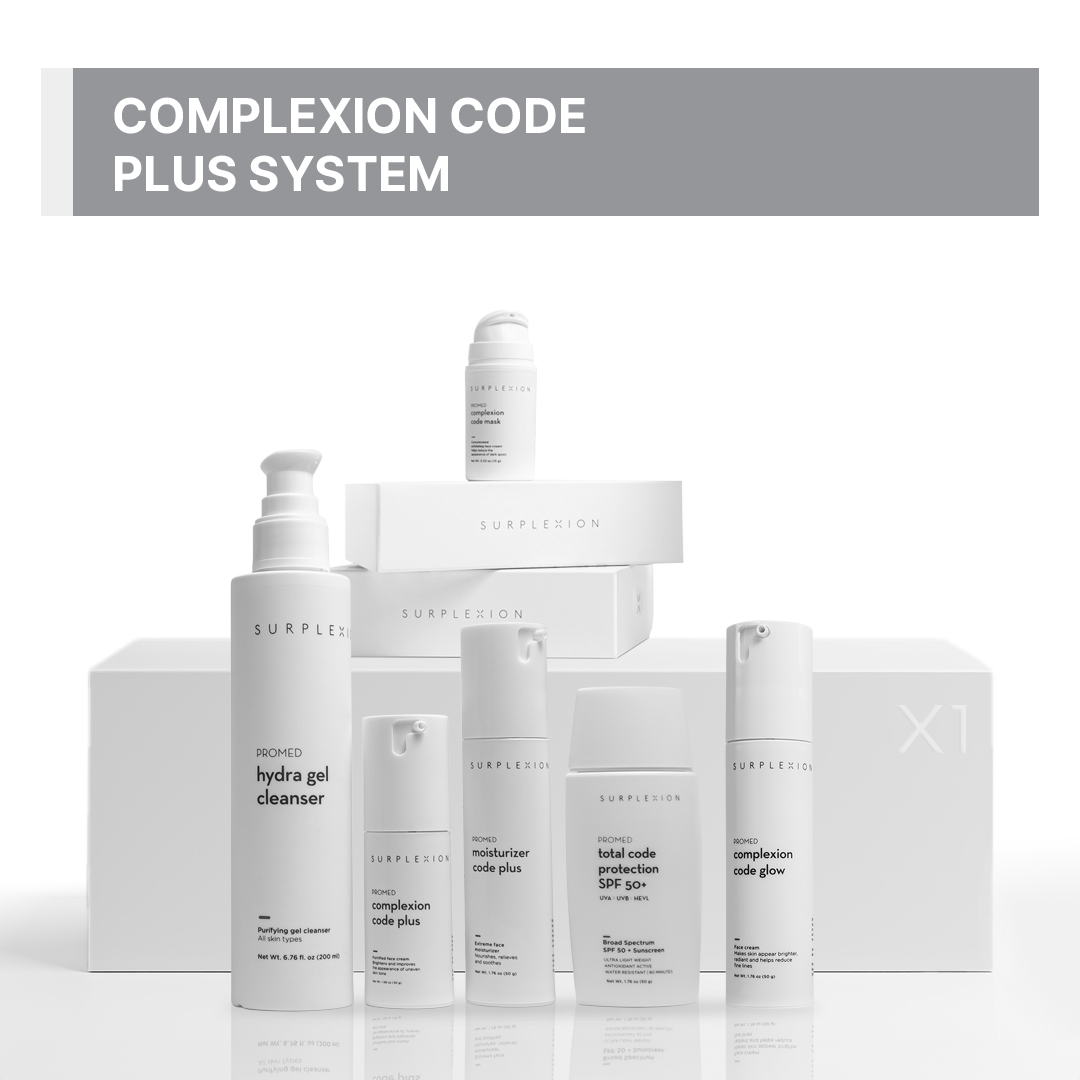
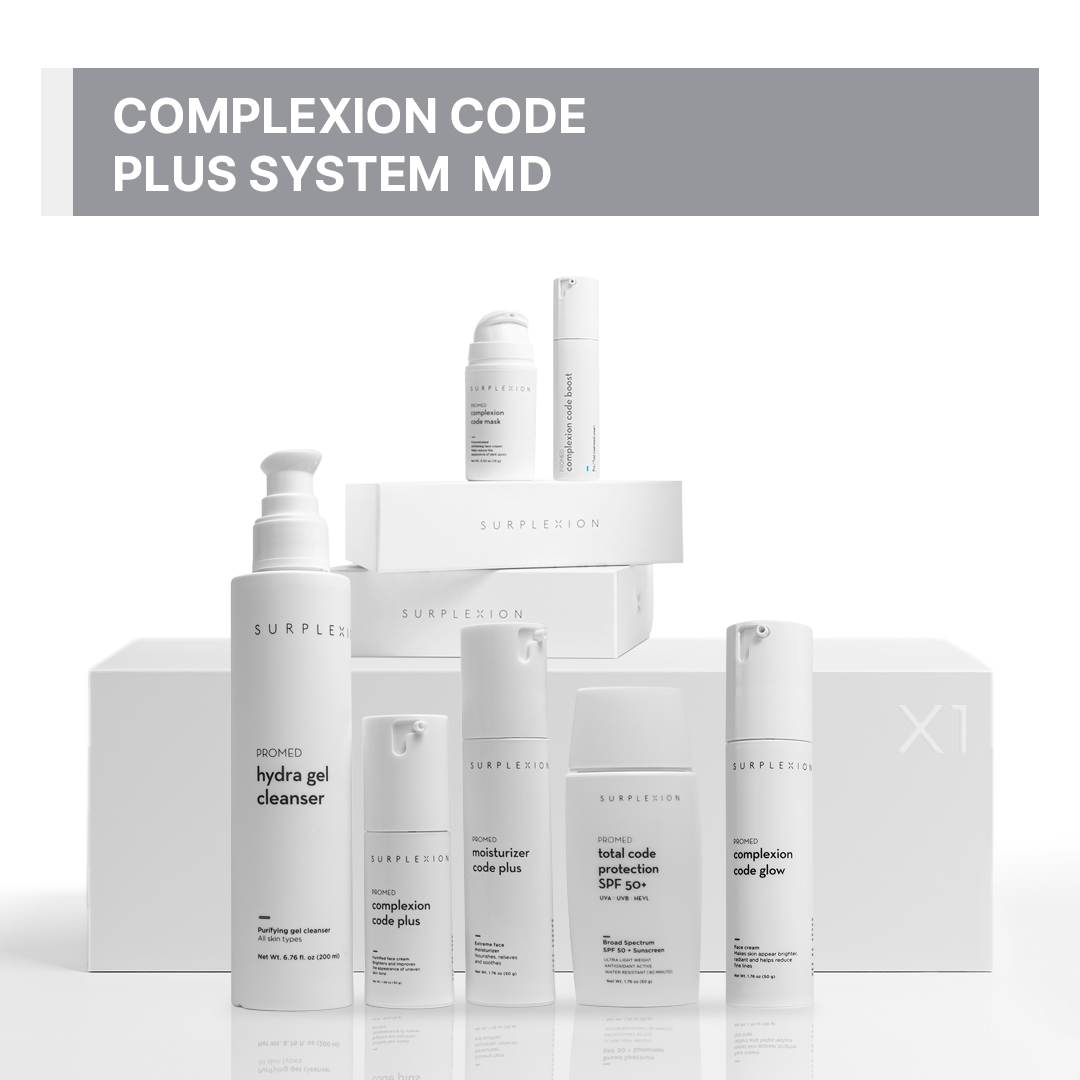
Total Code Protection SPF 50+
Formulated as a three-function system: broad-spectrum UV shield, antioxidant defense complex, and anti-inflammatory prevention. The inclusion of niacinamide provides an additional benefit beyond photoprotection: it actively inhibits the transfer of melanosomes from melanocytes to keratinocytes, reducing summer-induced pigmentation at the cellular level. Non-comedogenic, water-resistant, and suitable for all Fitzpatrick types.
Complexion Code Glow
17 antioxidants with nanosomes delivery address the oxidative component of the exposome — neutralizing free radical accumulation from UV, pollution, and heat before it cascades into visible damage. Simultaneously modulates micro-inflammatory signaling that drives melanocyte dysregulation and tone unevenness.
Hydra Gel Cleanser
Physiological cleansing that removes sunscreen, pollutants, and sebum accumulation without compromising barrier function. In summer, cleansing is a therapeutic act: removing the day's exposome residue and preparing the barrier for evening regeneration.
Protocol
AM: Hydra Gel Cleanser → Complexion Code Glow → Total Code Protection SPF 50+
PM: Hydra Gel Cleanser → Complexion Code Glow → Moisturizer Code repair
Suitable for all Fitzpatrick phototypes, reactive skin, post-procedure patients, and summer maintenance protocols.
The Clinical Argument
Summer is not the season to pause clinical protocols. It is the season to protect clinical investments. Every treatment performed in the clinic — every corrective protocol, every pigmentation result, every structural improvement — can be compromised by an unprotected summer exposome.
The professionals who frame summer protection as a clinical argument — not a cosmetic recommendation — build patient compliance, extend treatment results, and create a natural return-visit trigger at the end of summer when correction resumes.
Featured Products in the Protocol


Dr. Juan Camilo Calderón
Medical Doctor
All protocols validated by Juan Camilo Calderón, MD — XTETIC Medical Director. A physician trained in Dermatology and aesthetic medicine immunology. He is also a professor, scientific consultant, international speaker, and dermatology publication reviewer.


